

Imagine trying to read War and Peace in a single sitting and then explain it to a friend in two sentences. That’s essentially what modern AI is asked to do every day: take mountains of text and boil them down into something short, clear, and useful.
But how does a machine pull that off? Let’s look under the hood.
Why Summarization Is Harder Than It Looks
When humans summarize, we don’t just pick random sentences—we decide what’s important. That judgment depends on context:
- A student writing an essay might focus on the main arguments.
- A movie buff might care about plot twists.
- A businessperson might only want financial figures.
AI faces the same challenge: figuring out what matters most for the task at hand.
Extractive vs. Abstractive Summarization
There are two main strategies AI uses:
- Extractive Summarization: This is the “copy-and-paste” approach. The model pulls the most relevant sentences directly from the text.
- Example: News apps often do this when showing a preview of an article.
- Abstractive Summarization: This is the “paraphrase” approach. Instead of copying, the AI generates new sentences that capture the essence, almost like how a human would.
- Example: When ChatGPT explains a research paper in plain English, that’s abstractive.
Modern systems usually mix both—keeping key sentences while rephrasing others for clarity.
The Transformer’s Secret Weapon: Attention
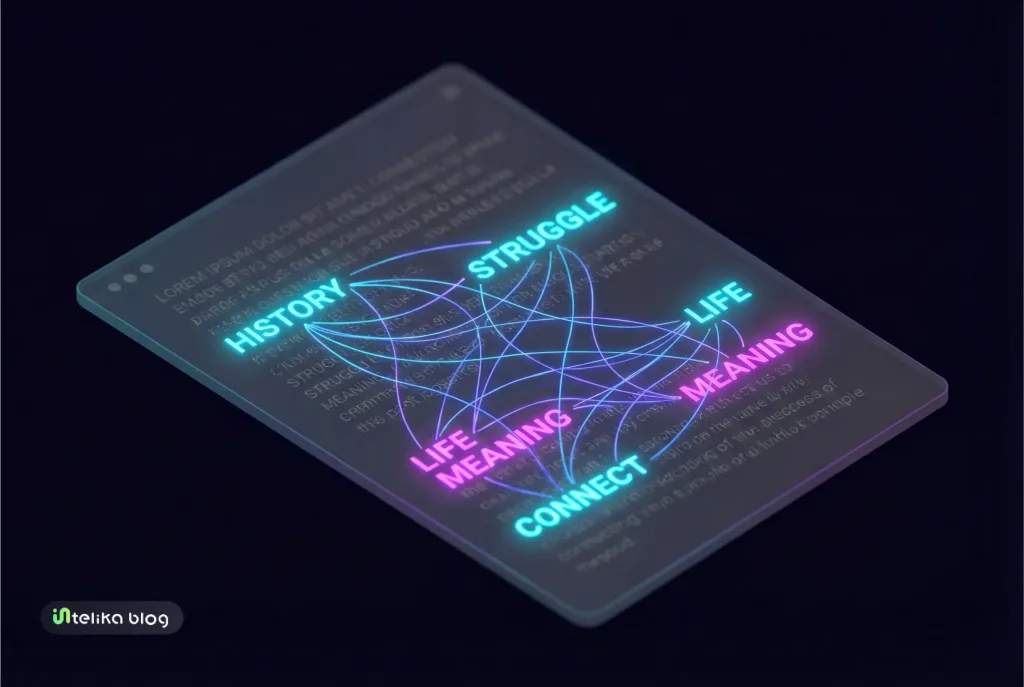
The breakthrough that made summarization actually work at scale was the Transformer model. Here’s the trick: Transformers use attention mechanisms to figure out which parts of a text deserve more focus.
Take the sentence:
“Despite its massive length, War and Peace captures both the sweep of history and the intimate struggles of individual lives.”
If asked to summarize, the model assigns more “attention weight” to words like massive length, history, and individual lives—ignoring filler words. This helps it zero in on the main ideas.
Real-World Examples You Use Every Day
- Google Search: Those little text snippets under each link? That’s summarization.
- YouTube: The auto-generated “key moments” in a video rely on summarization and NLP.
- Spotify/Podcasts: Some apps now give you episode summaries before you listen.
- ChatGPT/Notion AI: Let’s be honest—half the time people use these tools, it’s to shrink long reports into digestible chunks.
You might not notice it, but AI summarization is everywhere.
The Pitfalls: When Summaries Go Wrong
Summarization isn’t foolproof. AI can:
- Miss nuance (reducing a complex debate into a yes/no).
- Over-generalize (turning 10 chapters into a cliché).
- Hallucinate (inserting details that never existed).
This is why human oversight still matters—especially for things like legal, academic, or medical texts.
The Future: Personalized Summaries
The next frontier isn’t just shorter summaries—it’s tailored ones.
- A doctor and a patient might get different summaries of the same medical report.
- A student and a CEO might see the same book condensed with totally different highlights.
In other words, summarization is moving from “one-size-fits-all” to “fit-for-purpose.”

Final Thoughts
Summarization is less about shrinking text and more about distilling meaning. AI doesn’t truly “understand” books or papers—it identifies patterns and priorities. But when done right, it feels almost magical: entire worlds compressed into a handful of sentences.
So the next time you skim a summary instead of slogging through 300 pages, remember—behind that neat little paragraph is an algorithm working very hard to decide what matters most.
